Can an AI Agent Actually Buy Things for You? 'Agentic Commerce,' Explained
Visa and Mastercard have both built payment systems specifically for this, and OpenAI struck a partnership with Visa in June 2026 to route ChatGPT-initiated purchases through it. It works through tokens — a stand-in for your card number that's locked to one agent, one spending limit, and one merchant scope — not by handing an AI your actual card number.
bots.team doesn't do this today: none of your bots can spend money on your behalf. This article explains the broader trend so you know what to expect if a tool ever asks for that kind of access, and what questions to ask before you say yes.
What is "agentic commerce," actually?
It's the industry's name for a simple idea: instead of you clicking "buy now," an AI agent does it, inside limits you set ahead of time. You might tell an agent "reorder my usual coffee beans when I'm running low, up to $25" or "find the cheapest flight matching these dates and book it if it's under $400" — and the agent finishes the purchase itself instead of just showing you options to click through.
This has moved from a hypothetical to real, working infrastructure fast. Visa's "Intelligent Commerce" program and Mastercard's "Agent Pay" both launched dedicated tools for it in 2026, and in June 2026 Visa announced a partnership with OpenAI to plug its payment network directly into ChatGPT's shopping experience — covering how an agent gets verified, how a transaction gets approved in real time, and how fraud gets caught.
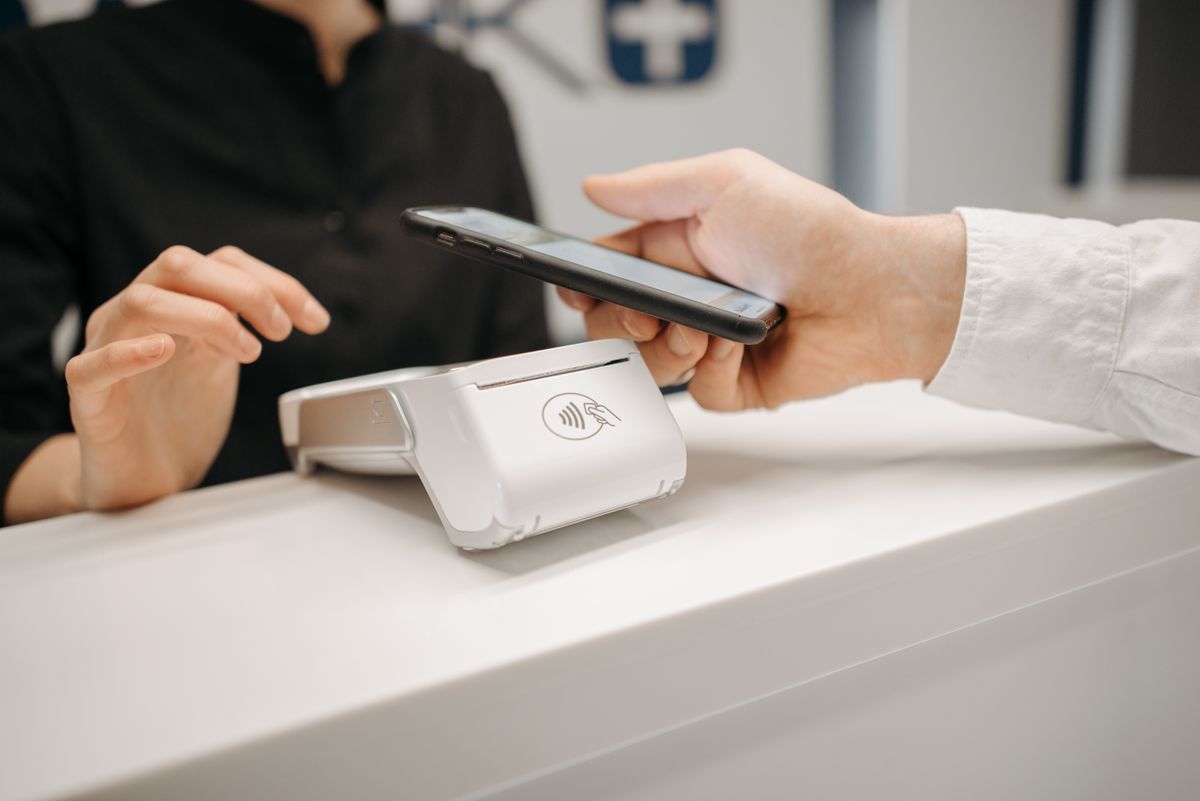 Agentic commerce borrows the same idea as tap-to-pay: a token stands in for your real card, so nothing sensitive gets handed over directly.
How does an AI agent actually pay — does it get your real card number?
No, and this is the part worth understanding even if you never use one of these tools. Instead of giving an agent your raw card number, the payment networks issue a token — a substitute credential that's tied to three things at once:
- A specific agent. The token only works for that one piece of software, not any AI tool that asks.
- A specific scope. Mastercard calls this binding the token to "a specific merchant scope and a specific consent policy" — meaning the agent can only spend where and how you said it could.
- A spending limit you set. Not a suggestion — a hard ceiling the payment network itself enforces, separate from whatever the AI app claims it will do.
That structure exists because trust is genuinely the bottleneck here, not the technology. A June 2026 industry survey found 95% of consumers have at least one concern about AI agents making purchases, and only 45% currently say they're comfortable with it — but half said they'd trust it more if fraud protections were clearly spelled out. The token-and-limit system is the payment networks' answer to that gap.
What controls actually keep this safe?
If you ever do turn on a "let this AI buy things for me" feature in some tool, these are the same four controls security teams recommend checking for — regardless of which company built it:
| Control | What it does | Ask yourself |
|---|---|---|
| Spending cap | A hard dollar limit per purchase or per period, enforced by the card network, not just the app | Is the limit set by me, or just described in the app's settings screen? |
| Merchant restriction | Locks the agent to specific stores or categories, not "anywhere online" | Can I see and edit the list of where it's allowed to spend? |
| Single-use or scoped credentials | Each transaction gets its own token instead of one reusable card number the agent holds indefinitely | If the agent were compromised today, what's the worst it could spend before I noticed? |
| Audit trail | Every purchase is logged and tied back to a real person's approval | Can I see a full list of what it bought and when, not just a monthly total? |
The honest risk isn't exotic. As one payments-security guide puts it plainly: an agent "executes exactly what it is configured to do" — unlike a person, it won't pause and question an unusual charge on its own. That's not a reason to avoid the category; it's the reason all four controls above exist, and the reason to check for them before turning any purchasing feature on.
 A spending cap works the same way whether it's set for a child's allowance or an AI agent — it's a limit the system enforces, not just a polite request.
Does bots.team let a bot spend money?
Being straight about this: No. bots.team's bots can watch prices, summarize documents, tidy files, and draft things for your review — but as of this writing, none of them can complete a purchase, move money, or hold any kind of payment credential. If you set up a bot to "watch for a restock and let me know," it will tell you — it won't buy it for you. That's consistent with the general advice in Which AI Bot Job Should You Start With?: money and irreversible actions are exactly the categories worth holding back from a bot's very first task, agentic-commerce infrastructure or not.
This isn't a permanent design decision we're announcing here — just an honest statement of where things stand today, so you don't assume a capability exists that doesn't. If that changes, it would need the same kind of visible spending caps, merchant limits, and audit trail described above, not a quiet default-on toggle.
Frequently asked questions
Is this the same as an AI agent having my saved card on file, like Amazon already does? Not quite. A saved card on a shopping site still requires you to click "place order" each time. Agentic commerce is built so the agent itself completes that final step — the token and spending limit are what make companies comfortable removing your click from the loop.
What happens if an AI agent makes a mistake — buys the wrong size, the wrong quantity, books the wrong date? The same dispute and refund processes that exist today still apply — Visa alone processed 106 million purchase disputes in 2025. The agentic-commerce systems add an audit trail specifically so a mistaken purchase can be traced to exactly which agent, which permission, and which merchant made it, rather than being a mystery charge.
Is it safe to let an AI agent negotiate a price or deal on my behalf? That's a related but distinct capability some tools are testing — separate from completing a purchase. If a tool offers it, the same questions apply: what's the hard limit, can you see the outcome before it's final, and is there a log of what was agreed to.
Should I turn on AI purchasing features when they show up in apps I already use? There's no universal answer, but the checklist is short: confirm there's a real spending cap (not just a description), confirm it's scoped to specific merchants, and confirm you can see a log of every purchase after the fact. If any of those three is missing, that's reason enough to wait.
Does bots.team ever plan to let bots buy things? Not something this article can promise either way — but if it ever happens, it won't be a quiet toggle. bots.team's bots already work on a "watch and report back" model with no standing access to your money today; any purchasing capability would need the same visible limits described above before it shipped, not less.
Right now, the honest gap between "an agent that can tell you about a price change" and "an agent that can act on it with your money" is exactly where bots.team draws its line — deliberately. Every bot runs on its own schedule, tied to a folder or a page you point it at, and reports back so you decide what happens next. No standing access to your money, no inbound door for anyone else to reach it, and nothing that spends on your behalf without you seeing it first. If a purchasing feature ever gets added, it'll show up with the same kind of visible limits this article describes — not a quiet default-on switch.
Sources: Visa Intelligent Commerce and OpenAI partnership announcements (June 2026); Mastercard Agent Pay documentation; PYMNTS and American Banker reporting on 2026 agentic-commerce consumer trust research; industry payment-security guidance on AI agent spending controls.