AI Agent vs. Chatbot — What's Actually Different?
Short answer: a chatbot answers one question at a time and forgets you the moment the tab closes. An agent is given a goal, keeps working toward it across multiple steps without you prompting each one, and can still be running an hour — or a week — after you stopped looking at it. Here's the actual mechanism behind that difference, not just the marketing version.
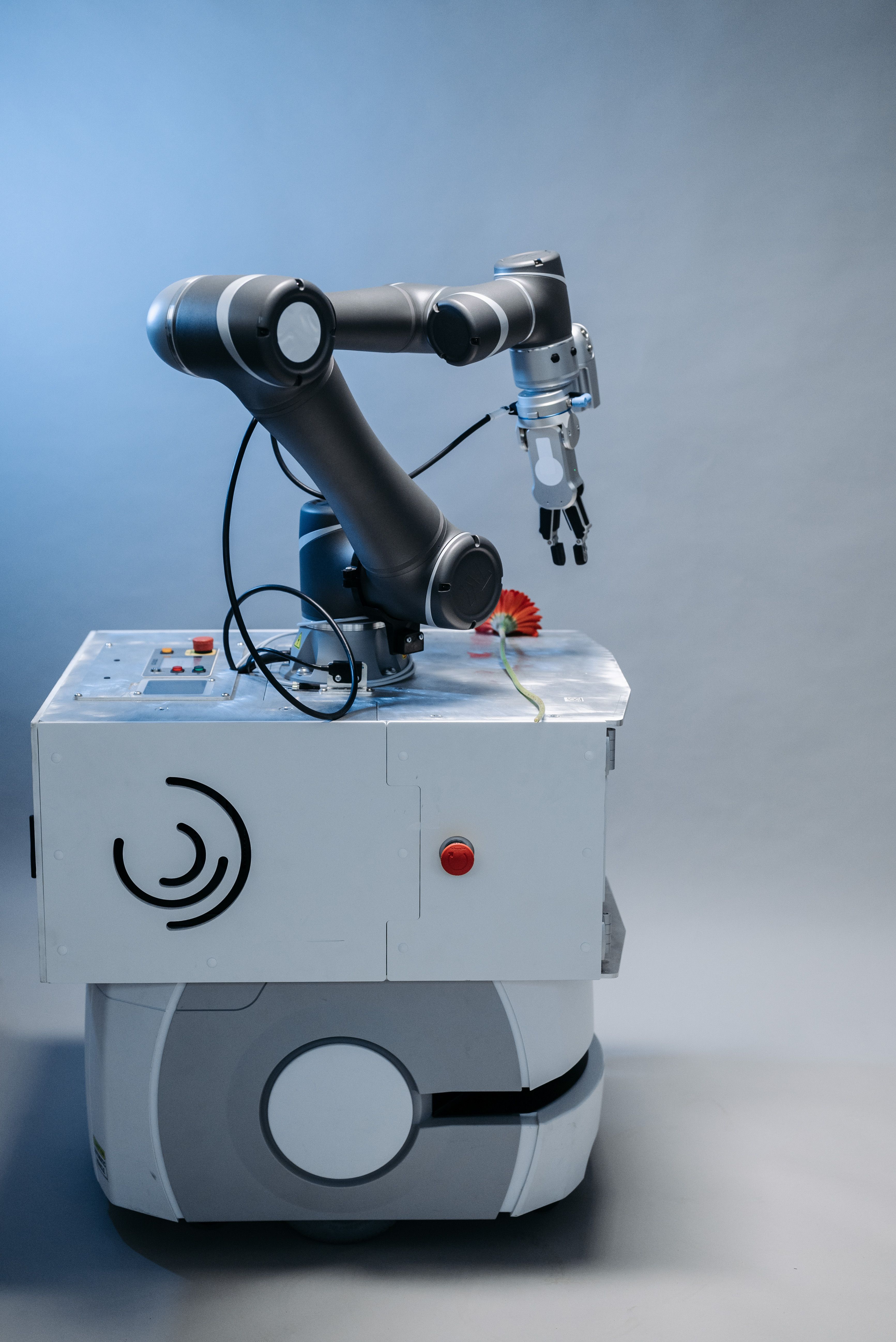
The word "agent" borrows from robotics for a reason: it means something that acts in the world, not something that just talks about it.
Direct answer
A chatbot is reactive: you send a message, it replies from what it knows, and the interaction ends until you type again. An AI agent is goal-driven: you give it an objective, and it runs a loop — decide what to do, use a tool or take an action, check whether that got it closer to the goal, decide the next step — repeating on its own until the job is done or it needs your input. The chatbot's unit of work is a reply. The agent's unit of work is a task.
That loop is also why agents can run on a schedule and chatbots can't, really. A chatbot has nothing to do between your messages. An agent has a standing job to keep doing.
The mechanical difference, not the marketing difference
"Agent" gets used loosely in 2026 — plenty of products slap the word on what's still a chatbot with a nicer UI. The real test isn't what a tool calls itself. It's whether these three things are true:
It can take actions, not just generate text. A chatbot's only output is a message back to you. An agent's outputs include actions with real effects — loading a webpage, reading a file, sending a request, writing a note — through what's usually called "tool use."
It evaluates its own progress and decides the next step. After each action, an agent checks the result against the goal and picks what to do next — without you telling it. A chatbot has no "next step" concept; every step is a question you asked.
It can keep going without you present. A chatbot session ends when you stop typing. An agent can run for minutes, hours, or on a recurring schedule, because the goal — not your last message — is what it's working from.
Put together, this is what practitioners mean by an "agent loop": observe → plan → act → evaluate, repeated until the goal is met. A chatbot only ever does the first half of that — observe your message, generate a response — and stops.
A concrete example: "watch my competitor's price"
The difference is easiest to see side by side. Say you want to know if a competitor changes their pricing page.
With a chatbot:
- You: "What's on Acme's pricing page right now?"
- Chatbot: "I don't have live access to that page, but based on what I was trained on, their pricing was roughly $X/mo as of my last update."
The conversation ends there. Tomorrow, if their price changes, nothing happens — you'd have to remember to ask again, and the chatbot still can't browse to check unless you paste in the new page yourself.
With an agent:
- You: "Check Acme's pricing page every morning and tell me if anything changes."
- Agent: "Got it. I'll load the page daily, compare it to what I saw last time, and only message you if something's different."
- Agent (11 days later, unprompted): "Acme added a $299/mo enterprise tier this morning — wasn't there yesterday."
Same underlying question. The chatbot can only tell you what it already knows and stops. The agent turns the request into a standing plan, keeps its own memory of what it saw last time so it can compare, and only speaks up when there's something worth saying — which is also why a well-built agent should feel calmer than a chatbot, not noisier: it's filtering for what actually changed instead of answering on demand.

An agent turns one instruction into a standing plan it checks off on its own schedule — the instruction happens once, the work happens repeatedly.
Why this distinction is showing up everywhere right now
This isn't just semantics — it's the basis of a real, dated industry forecast. Gartner's research org predicts that by the end of 2026, 40% of enterprise applications will include task-specific AI agents, up from under 5% in 2025 — an eightfold jump in a single year, which Gartner itself frames as one of the fastest shifts in enterprise software since cloud computing arrived. Their own example of what counts: a system that scans logs, assesses what it finds, and initiates a response on its own — not a chat window that tells you what it found and waits for you to act.
| Metric | Value |
|---|---|
| Enterprise apps with task-specific AI agents (projected end-2026) | 40% |
| Baseline (2025) | <5% |
| Growth multiple | 8x in one year |
The practical read for a solo founder: the tools around you are shifting from "ask and get an answer" to "describe a job and it keeps happening." That's a different buying decision. With a chatbot, you're evaluating how good the answers are. With an agent, you're evaluating how much you trust it to act correctly on its own, on a schedule, without you re-checking every output — which is really a question about scope, memory, and what it's allowed to touch, not about how articulate it sounds.
What this means when you're evaluating a tool
A few practical questions to ask any product that calls itself an "AI agent," "AI employee," or similar — not to catch it out, just to know what you're actually getting:
- Does it do anything if I don't send a message? If the answer is no, it's a chatbot regardless of what it's branded.
- Does it remember what it did last time, on its own? An agent worth the name keeps state between runs so it can compare, not just respond fresh each time.
- Can I give it a standing job in plain English, once, and walk away? That's the core promise of the category — describe it once, not re-prompt it daily.
This is the exact gap bots.team is built to close for non-technical founders: you describe a job once in plain English — "check my site every morning," "watch this competitor's pricing," "keep my downloads folder tidy" — and it becomes a standing bot that runs on its own schedule, not a chat window you have to remember to open.
Worth knowing: Not every task needs an agent. If a question has one right answer and no follow-up ("what's your refund policy?"), a chatbot answers it faster and more cheaply. Agents earn their keep on recurring, multi-step, or monitoring-style work — the kind where the value is in it happening again and again without you.

The right question isn't "chatbot or agent" in the abstract — it's which one matches the shape of the specific task in front of you.
Quick answers
Is ChatGPT a chatbot or an agent?
By default, a chatbot — you ask, it answers, the conversation ends when you stop. Some ChatGPT modes and plugins add agent-like behavior (browsing, running code, multi-step tasks), but the base product's core loop is reactive question-and-answer.
Can a chatbot become an agent?
Yes — the underlying language model is often the same; what changes is whether it's wired up with tools to take actions, memory to track state across steps, and a way to keep running without a human sending the next message. That wiring is the product decision that turns a chatbot into an agent.
Do I need to know how the agent loop works to use one?
No. The mechanism matters for evaluating a tool, not for using it — a well-built agent product should let you describe a job in plain English and never think about "observe, plan, act, evaluate" again.
Is an "AI employee" the same thing as an agent?
It's a framing of the same underlying idea — a goal-driven system that keeps working on a standing job — aimed at a non-technical audience. The term emphasizes what it's for (a recurring role, like hiring help) rather than the technical mechanism (the agent loop).
Sources: Gartner, "Gartner Predicts 40% of Enterprise Apps Will Feature Task-Specific AI Agents by 2026, Up from Less Than 5% in 2025" (press release, gartner.com). Agent-loop framing (observe–plan–act–evaluate) reflects standard 2024–2026 usage across LLM-application literature. Images via Pexels.